Table of Contents
ToggleThe best baby-led weaning approach lets babies feed themselves solid foods from the start. Instead of spoon-feeding purees, parents offer soft finger foods that babies can grab, explore, and eat at their own pace. This method has gained popularity among families who want their little ones to develop healthy eating habits early. Whether parents are curious about getting started or looking for practical tips, this guide covers everything they need to know about baby-led weaning, from the right age to begin to the safest first foods to offer.
Key Takeaways
- The best baby-led weaning approach allows babies to self-feed soft finger foods from around 6 months of age, skipping purees entirely.
- Watch for developmental readiness signs like sitting upright, good head control, and interest in food before starting baby-led weaning.
- Ideal first foods include steamed vegetables, soft fruits, and iron-rich proteins that pass the “squish test” between your fingers.
- Gagging is a normal protective reflex during baby-led weaning, while true choking is silent and requires immediate intervention.
- Baby-led weaning may support healthier eating habits, better motor skill development, and easier family mealtimes.
- Always supervise meals, ensure proper upright positioning, and learn infant CPR to practice baby-led weaning safely.
What Is Baby-Led Weaning?
Baby-led weaning (BLW) is a feeding method where babies skip purees and start eating solid foods on their own. The term “weaning” here refers to introducing foods alongside breast milk or formula, not stopping milk feeds entirely.
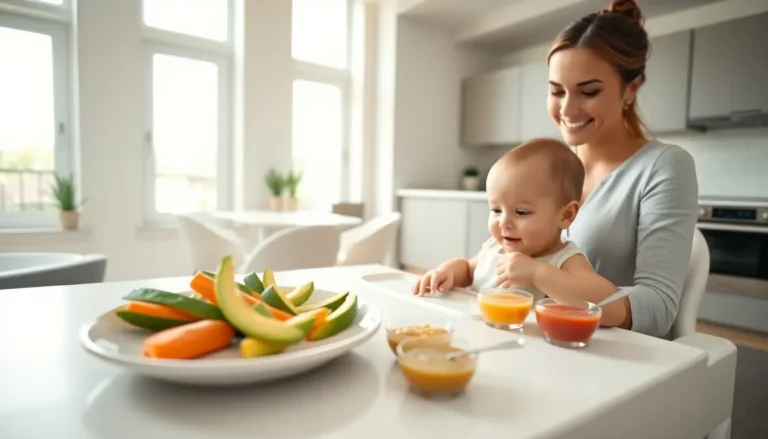
With traditional weaning, caregivers spoon-feed smooth purees and gradually increase texture over time. Baby-led weaning flips this script. Babies sit at the family table and pick up soft, age-appropriate foods with their hands.
The concept gained traction after British health visitor Gill Rapley published research on the topic in the early 2000s. She observed that babies have natural instincts to self-feed when given the opportunity.
Here’s what makes baby-led weaning different:
- Self-feeding from day one: Babies control what goes into their mouths
- Whole foods: Soft pieces of real food instead of blended purees
- Family meals: Babies eat modified versions of what everyone else eats
- No pressure: Babies decide how much to eat
This approach treats babies as active participants in mealtime rather than passive recipients. They learn to chew before they swallow (the opposite of puree feeding), which can support oral motor development.
When to Start Baby-Led Weaning
Most babies are ready for baby-led weaning around 6 months of age. The American Academy of Pediatrics recommends introducing solid foods at this point, and baby-led weaning fits within these guidelines.
Age alone isn’t the only factor. Parents should watch for these developmental signs of readiness:
- Sitting upright with minimal support: Babies need core stability to eat safely
- Good head control: They should hold their head steady without wobbling
- Loss of tongue-thrust reflex: This reflex pushes food out of the mouth and typically fades around 4-6 months
- Interest in food: Reaching for items on parents’ plates or watching others eat intently
- Pincer grasp developing: The ability to pick up objects between thumb and forefinger (though this often improves with practice)
Starting too early poses risks. Babies who can’t sit well may choke more easily. Their digestive systems also need time to mature.
Some parents worry about starting baby-led weaning later than 6 months. That’s usually fine. Every baby develops at their own pace. A baby ready at 7 months will likely catch up quickly once they begin.
Pediatricians can help parents determine if their specific baby is ready for the best baby-led weaning experience. A quick check-up before starting provides peace of mind.
Best First Foods for Baby-Led Weaning
Choosing the best first foods for baby-led weaning matters. The ideal starter foods are soft enough to mash with gums but firm enough to hold.
Vegetables
Steamed vegetables make excellent first foods. Good options include:
- Steamed broccoli florets (the “handle” makes them easy to grip)
- Roasted sweet potato sticks
- Soft-cooked carrot spears
- Steamed zucchini strips
- Ripe avocado slices
Fruits
Soft, ripe fruits work well for baby-led weaning:
- Banana (cut lengthwise or rolled in crushed cereal for grip)
- Ripe pear slices
- Soft mango strips
- Steamed apple wedges
- Ripe peach slices
Proteins
Babies need iron-rich foods. Options include:
- Shredded chicken or turkey
- Soft-cooked meatballs (cut in half)
- Flaked salmon or other fish (check for bones)
- Scrambled eggs
- Soft-cooked beans
Foods to Avoid
Some foods aren’t safe for baby-led weaning:
- Honey: Risk of botulism until age 1
- Whole nuts: Choking hazard
- Whole grapes or cherry tomatoes: Must be quartered lengthwise
- Hard raw vegetables: Like raw carrots or celery
- Popcorn: Choking risk
- Added salt and sugar: Babies’ kidneys can’t process excess sodium
The best baby-led weaning foods pass the “squish test.” If parents can mash the food between their thumb and forefinger, it’s soft enough for baby gums.
Essential Safety Tips
Safety concerns often top parents’ lists when considering baby-led weaning. Understanding the difference between gagging and choking helps ease these worries.
Gagging vs. Choking
Gagging is normal and actually protective. Babies have a sensitive gag reflex positioned far forward on the tongue. When food triggers it, they cough and splutter, this pushes food forward and prevents choking. Gagging looks (and sounds) alarming but usually resolves on its own.
Choking is silent. A choking baby can’t cough, cry, or make noise because their airway is blocked. Their face may turn blue. This requires immediate intervention.
Key Safety Rules for Baby-Led Weaning
- Always supervise: Never leave a baby alone while eating
- Proper positioning: Babies must sit upright in a high chair, not reclined
- Cut foods correctly: Long strips for young babies, small pieces as pincer grasp develops
- Avoid high-risk shapes: Round foods like grapes and hot dogs should be quartered lengthwise
- Learn infant CPR: All caregivers should know what to do if choking occurs
- Let baby lead: Don’t put food in baby’s mouth, let them do it themselves
Research published in Pediatrics found that baby-led weaning doesn’t increase choking risk when parents follow safety guidelines and offer appropriate foods. The best baby-led weaning practices prioritize these precautions.
Benefits of Baby-Led Weaning
Baby-led weaning offers several advantages that appeal to modern families.
Motor Skill Development
Self-feeding requires coordination. Babies practice hand-eye coordination, develop their pincer grasp, and strengthen oral muscles. These skills transfer to other areas of development.
Healthy Eating Habits
Studies suggest baby-led weaning may reduce picky eating later. A 2017 study in BMJ Open found that babies who self-fed were more likely to enjoy a variety of foods as toddlers. They learn to recognize hunger and fullness cues because they control their intake.
Family Mealtimes
With baby-led weaning, babies eat with the family. Parents don’t need to prepare separate purees or sit apart to spoon-feed. Everyone eats together, which supports social development and makes mealtimes easier for busy households.
Exposure to Textures
Babies experience real food textures from the beginning. This early exposure may make the transition to table foods smoother compared to puree-fed babies who sometimes resist lumpy textures.
Cost and Convenience
No special equipment or jarred baby food needed. Families save money by sharing meals with baby (minus unsafe ingredients). It’s one of the reasons the best baby-led weaning approach appeals to budget-conscious parents.
Potential Drawbacks
Baby-led weaning isn’t perfect. It’s messy, food ends up everywhere. Early meals involve more exploration than eating, which can frustrate parents expecting babies to consume large amounts. Some babies may get less iron initially, so offering iron-rich foods consistently matters.