Table of Contents
ToggleBaby-led weaning has transformed how many families introduce solid foods to their infants. Instead of spoon-feeding purees, this approach lets babies feed themselves from the start. Parents across the globe have embraced baby-led weaning for its simplicity and developmental benefits. But where do you begin? This guide breaks down everything new parents need to know, from readiness signs to safe first foods. Whether you’re curious or ready to immerse, these practical tips will help you start with confidence.
Key Takeaways
- Baby-led weaning lets infants skip purees and self-feed soft, whole foods from around six months of age.
- Look for readiness signs like sitting independently, loss of tongue-thrust reflex, and interest in food before starting.
- Offer finger-length strips of soft foods like steamed vegetables, ripe fruits, and shredded proteins for safe self-feeding.
- Gagging is a normal protective reflex during baby-led weaning—choking is silent and requires immediate action, so learn infant CPR beforehand.
- Breast milk or formula remains the primary nutrition source until age one, with solid foods serving as a complement.
- Embrace the mess and let your baby explore textures and flavors at their own pace—intake naturally increases as skills develop.
What Is Baby-Led Weaning?
Baby-led weaning (BLW) is a feeding method where babies skip purees and eat soft, whole foods from the beginning. The baby controls what goes into their mouth, how much they eat, and how fast. Parents offer age-appropriate foods, and the baby does the rest.
This approach differs from traditional weaning, where caregivers spoon-feed mashed or pureed foods. With baby-led weaning, infants sit at the table during family meals and explore foods at their own pace. They pick up pieces of food, bring them to their mouths, and learn to chew and swallow independently.
The term “baby-led weaning” was popularized by British health visitor Gill Rapley in the early 2000s. Her research showed that babies have natural instincts to self-feed when developmentally ready. The method has since gained popularity in the US, UK, and beyond.
Baby-led weaning treats mealtimes as learning experiences. Babies discover textures, flavors, and temperatures through hands-on exploration. They develop fine motor skills by grasping food and bringing it to their mouths. It’s messy, yes, but it’s also how babies learn.
Benefits of Baby-Led Weaning
Baby-led weaning offers several advantages for both babies and parents. Research and parent reports highlight these key benefits:
Motor Skill Development
Self-feeding strengthens hand-eye coordination and fine motor skills. Babies practice the pincer grasp (using thumb and forefinger) earlier than spoon-fed peers. These skills transfer to other activities like drawing and buttoning clothes.
Healthy Eating Habits
Babies who control their intake learn to recognize hunger and fullness cues. Studies suggest baby-led weaning may reduce picky eating and lower obesity risk later in childhood. When babies choose what and how much to eat, they develop a healthier relationship with food.
Family Meal Integration
Baby-led weaning makes family dinners easier. The baby eats modified versions of what everyone else eats, no separate purees required. This saves time and helps babies feel included in family routines.
Exposure to Variety
Babies experience different textures, shapes, and flavors from day one. This early exposure can lead to more adventurous eating as toddlers. A baby who tries steamed broccoli at seven months may accept vegetables more readily at age three.
Less Stressful Mealtimes
Many parents find baby-led weaning reduces mealtime battles. There’s no coaxing, no airplane spoons, and no pressure. The baby leads, and parents simply provide safe options.
When and How to Start Baby-Led Weaning
Timing matters with baby-led weaning. Most babies show readiness around six months of age, though every child develops differently.
Signs of Readiness
Before starting baby-led weaning, look for these developmental milestones:
- Sitting independently: The baby can sit upright with minimal support. This position keeps the airway clear and allows safe swallowing.
- Loss of tongue-thrust reflex: Younger babies automatically push food out of their mouths. This reflex fades around four to six months.
- Interest in food: The baby watches others eat, reaches for food, and opens their mouth when food approaches.
- Ability to grasp objects: The baby can pick up toys and bring them to their mouth.
The American Academy of Pediatrics recommends exclusive breastfeeding or formula feeding until around six months. Baby-led weaning should begin alongside, not instead of, breast milk or formula.
Best First Foods to Offer
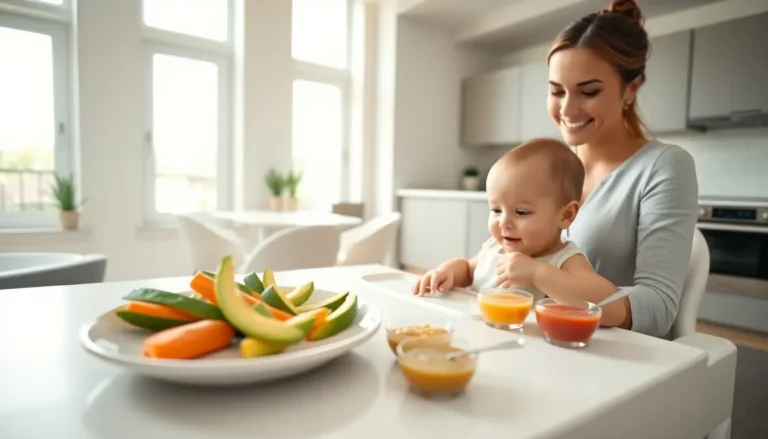
Choose soft, easy-to-grip foods for early baby-led weaning sessions. Cut foods into finger-length strips so babies can hold them with a closed fist while part sticks out to gnaw.
Great starter foods include:
- Steamed vegetables: Broccoli florets, carrot sticks, sweet potato wedges, and zucchini spears work well. Cook until soft enough to mash with gentle pressure.
- Ripe fruits: Banana spears, avocado slices, and soft pear wedges provide natural sweetness and nutrition.
- Soft proteins: Shredded chicken, flaked salmon, and well-cooked scrambled eggs offer iron and protein.
- Toast strips: Lightly toasted bread with a thin spread of nut butter (if no allergy concerns) gives babies practice with different textures.
Avoid honey (botulism risk under one year), whole nuts, hard raw vegetables, and foods with added salt or sugar. Cut round foods like grapes and cherry tomatoes lengthwise to prevent choking.
Safety Tips and Common Concerns
Safety is the top priority with baby-led weaning. Parents often worry about choking, but understanding the difference between gagging and choking helps ease concerns.
Gagging vs. Choking
Gagging is normal and protective. It moves food forward in the mouth before it reaches the airway. Babies gag frequently when learning to eat, they cough, sputter, and may look alarmed, but they’re safe. Choking is silent. A choking baby cannot cough, cry, or breathe. Learn infant CPR before starting baby-led weaning so you can respond if needed.
Supervision Is Essential
Never leave a baby alone while eating. Sit with them during every meal and snack. Keep distractions minimal so you can watch closely.
Proper Positioning
Always seat babies upright in a highchair with good back support. Reclined positions increase choking risk. Ensure the baby’s feet rest on a footrest or flat surface for stability.
Food Preparation
Cook foods until soft. Test by pressing between your fingers, if it mashes easily, it’s ready. Avoid sticky foods like globs of nut butter, which can clump in the throat.
Common Concerns Addressed
“Will my baby get enough nutrition?”
Breast milk or formula remains the primary nutrition source until age one. Solid foods complement milk feeds during baby-led weaning. Trust that babies take what they need.
“The mess is overwhelming.”
Yes, baby-led weaning is messy. Use a splat mat under the highchair, strip the baby down to a diaper, and embrace the chaos. The mess phase is temporary.
“My baby isn’t eating much.”
Exploration is the goal at first. Babies may squish, lick, and drop more food than they swallow. This is normal. Intake increases as skills develop.