Table of Contents
ToggleBaby-led weaning for beginners can feel overwhelming at first. Parents often wonder where to start, what foods to offer, and how to keep their baby safe. The good news? This feeding approach is simpler than it looks.
Baby-led weaning skips purees entirely. Instead, babies feed themselves soft, whole foods from the start. They explore textures, develop motor skills, and join family meals, all at their own pace. Research shows this method can encourage healthier eating habits and reduce picky eating later in life.
This guide covers everything parents need to know about baby-led weaning. From readiness signs to first food choices to safety essentials, each section breaks down the process into clear, actionable steps.
Key Takeaways
- Baby-led weaning for beginners starts around six months when babies can sit upright, have lost the tongue-thrust reflex, and show interest in food.
- Offer soft, finger-length foods like banana spears, avocado wedges, and steamed vegetables that babies can easily grasp and gum.
- Gagging is a normal protective reflex during baby-led weaning—choking is silent and requires emergency response, so learn infant CPR.
- Early introduction of common allergens (peanuts, eggs, fish) around six months may actually reduce allergy risk.
- Breast milk or formula remains the primary nutrition source until 12 months, so don’t worry if most food ends up on the floor at first.
- Avoid choking hazards like whole grapes, nuts, popcorn, and raw hard vegetables—always cut round foods into quarters.
What Is Baby-Led Weaning?
Baby-led weaning is a feeding method where babies self-feed solid foods instead of being spoon-fed purees. The term “weaning” here refers to introducing complementary foods alongside breast milk or formula, not stopping milk feeds entirely.
Developed and popularized by British health visitor Gill Rapley, baby-led weaning has gained significant traction worldwide. The core idea is straightforward: babies control what goes into their mouths, how much they eat, and how fast they eat it.
With traditional weaning, parents spoon-feed smooth purees and gradually introduce textures over time. Baby-led weaning takes a different path. Babies start with soft finger foods they can grasp and chew (or gum) themselves. Think soft banana strips, steamed broccoli florets, or ripe avocado wedges.
Proponents of baby-led weaning point to several benefits:
- Motor skill development: Picking up food, bringing it to the mouth, and chewing all build coordination.
- Self-regulation: Babies learn to stop eating when full, which may support healthy appetite control.
- Family inclusion: Babies eat the same foods as the rest of the family (with modifications for safety).
- Less mealtime stress: No airplane spoons or coaxing bites. Babies eat at their own pace.
Baby-led weaning isn’t all or nothing, though. Many families combine it with some spoon-feeding, especially for foods like yogurt or oatmeal. This mixed approach works well for daycare settings or when grandparents are in charge.
Signs Your Baby Is Ready for Baby-Led Weaning
Most babies show readiness for baby-led weaning around six months of age. But, age alone isn’t the deciding factor. Developmental milestones matter more.
Parents should watch for these key signs:
Sitting upright with minimal support: A baby needs trunk stability to safely swallow food. Slumping increases choking risk. If a baby can sit in a high chair and hold their head steady, they’ve likely hit this milestone.
Loss of the tongue-thrust reflex: Young infants automatically push foreign objects out of their mouths with their tongues. This reflex typically fades between four and six months. If food keeps getting pushed out, the baby probably isn’t ready.
Interest in food: Does the baby watch others eat? Do they reach for food on the table? Grab at spoons? These behaviors signal curiosity about eating.
Ability to grasp objects: Baby-led weaning requires picking up food. Babies need decent hand-eye coordination and the ability to bring items to their mouths intentionally.
Pediatricians generally recommend waiting until six months before starting any solids, purees or baby-led weaning. Before this age, a baby’s digestive system and motor skills typically aren’t mature enough. Premature babies may need adjusted timelines based on their corrected age.
When in doubt, parents should consult their pediatrician. Some babies show all the signs at 5.5 months: others need a few more weeks past six months. Every child develops differently.
Best First Foods for Baby-Led Weaning
Choosing first foods for baby-led weaning doesn’t need to be complicated. The best options share common traits: soft enough to mash between two fingers, easy to grip, and low choking risk.
Fruits and Vegetables
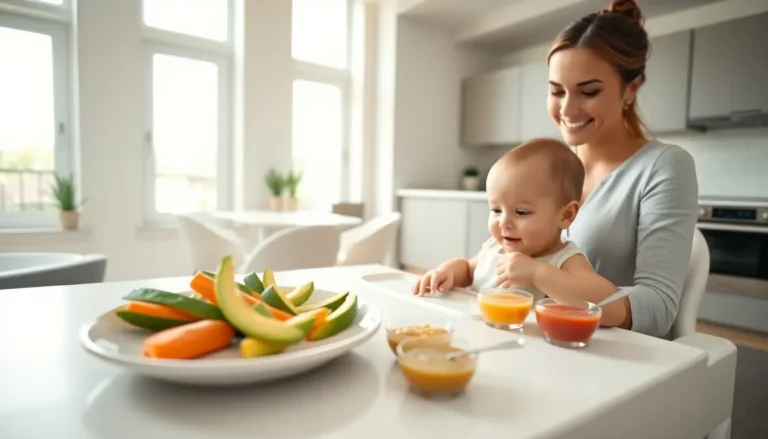
Soft fruits work wonderfully as starter foods. Ripe bananas (cut into spears), avocado wedges, and steamed sweet potato sticks are classic choices. Steamed carrots, zucchini, and broccoli florets also make excellent options.
Cut foods into finger-length strips, roughly the size of an adult pinky finger. This shape allows babies to grip the food in their fist while still having a portion sticking out to gnaw on.
Proteins
Proteins often surprise new parents. Babies can eat meat, fish, eggs, and beans from six months. Slow-cooked shredded chicken, flaked salmon (check carefully for bones), and strips of well-cooked omelet all work well.
Beans and lentils can be mashed slightly and spread on toast strips. Ground meat formed into small patties gives babies something to hold.
Grains and Starches
Toast strips with thin spreads of nut butter (if no allergy concerns) offer protein and carbs together. Soft-cooked pasta in large shapes, penne or fusilli, gives babies something to grab. Rice cakes and oatmeal pancakes round out this category.
Foods to Introduce Early
Recent research supports early introduction of common allergens. Peanuts, eggs, fish, and dairy can be offered around six months in age-appropriate forms. Early exposure may actually reduce allergy risk. Parents with family allergy history should discuss timing with their pediatrician.
Foods to Avoid
Some foods pose genuine hazards for baby-led weaning:
- Whole grapes, cherry tomatoes, or blueberries (cut these in quarters)
- Whole nuts
- Popcorn
- Raw hard vegetables like carrots
- Honey (until 12 months, due to botulism risk)
- Added salt and sugar
Essential Safety Tips for Baby-Led Weaning
Safety concerns top the list for parents considering baby-led weaning. Gagging and choking worry most caregivers, but understanding the difference changes everything.
Gagging vs. Choking
Gagging is normal and expected. It’s a protective reflex that pushes food forward when something triggers the back of the mouth. Babies gag frequently during baby-led weaning. They’ll cough, sputter, and even look uncomfortable. But gagging means the safety system is working.
Choking is silent. A truly choking baby cannot cough, cry, or make noise. Their airway is blocked. This is a medical emergency.
The gag reflex in babies sits further forward on the tongue than in adults. This means babies gag more easily, but it also means food gets rejected before it reaches the airway. As babies practice eating, their gag reflex moves backward, and gagging decreases.
Critical Safety Rules
Never leave a baby unattended while eating. This rule has no exceptions. Parents should stay within arm’s reach during all meals.
Ensure proper positioning. Babies must sit fully upright in a high chair with good back support. Reclining or slouching increases aspiration risk.
Learn infant CPR. Every caregiver practicing baby-led weaning should know how to respond to a choking emergency. Local hospitals, fire departments, and the Red Cross offer classes.
Prepare foods correctly. Soft foods cut into appropriate shapes minimize risk. The “squish test” helps: if a food can be mashed between thumb and forefinger, it’s soft enough.
Stay calm during gagging. Reacting with panic can frighten babies and create negative associations with eating. A calm response teaches babies that gagging is normal.
Baby-led weaning, when done correctly, doesn’t increase choking risk compared to traditional spoon-feeding. A 2016 study in Pediatrics found no significant difference in choking incidents between the two methods.
Common Mistakes to Avoid
Even well-prepared parents make missteps with baby-led weaning. Knowing these common mistakes helps families avoid frustration.
Starting too early. Eager parents sometimes begin before babies show all readiness signs. A baby who can’t sit unsupported or keeps pushing food out with their tongue needs more time. Waiting a few extra weeks prevents struggles.
Offering unsafe food shapes. Round foods like whole grapes and hot dog coins are choking hazards. Always quarter round foods lengthwise or cut them into safe strips.
Expecting babies to eat much. In the early months of baby-led weaning, most food ends up on the floor, in hair, or smeared across the high chair. That’s fine. Breast milk or formula remains the primary nutrition source until around 12 months. Food before one is mostly for exploration and practice.
Hovering or interfering. Parents sometimes can’t resist “helping” by putting food in the baby’s mouth. This defeats the purpose of baby-led weaning and can increase choking risk since the baby isn’t controlling the food placement.
Giving up after gagging episodes. Gagging scares parents. Some abandon baby-led weaning after a few episodes. But gagging decreases with practice. Persistence usually pays off.
Serving only “baby-friendly” foods. Baby-led weaning works best when babies eat what the family eats (modified for safety). Limiting options to a few “safe” foods restricts exposure and can encourage picky eating.
Adding salt to baby’s portions. Adult seasoning levels are inappropriate for babies. Cook family meals with minimal salt, or set aside the baby’s portion before seasoning.