Table of Contents
ToggleA baby-led weaning guide can transform how parents introduce solid foods to their little ones. Instead of spoon-feeding purees, babies feed themselves from the start. They grab soft food pieces, explore textures, and develop independence at their own pace.
This approach has gained popularity among parents worldwide. Research shows it may support motor skill development and create healthier eating habits. But many caregivers have questions. When should they start? What foods work best? How can they keep their baby safe?
This baby-led weaning guide covers everything parents need to know. From readiness signs to first food choices, safety precautions to developmental benefits, it’s all here. By the end, parents will feel confident about starting this feeding journey with their baby.
Key Takeaways
- Baby-led weaning lets babies feed themselves soft finger foods from around six months, skipping purees entirely.
- Look for readiness signs like sitting upright, loss of tongue-thrust reflex, and interest in food before starting your baby-led weaning journey.
- Start with soft, easy-to-grip foods like avocado strips, steamed broccoli, and banana spears cut to finger-sized wedges.
- Gagging is normal and protective during baby-led weaning—choking is silent, so always supervise meals and learn infant CPR.
- This baby-led weaning guide approach supports motor skill development, healthy eating patterns, and may reduce picky eating later.
- Prioritize iron-rich foods like soft-cooked beef, dark chicken meat, and lentils since babies’ iron stores deplete around six months.
What Is Baby-Led Weaning?
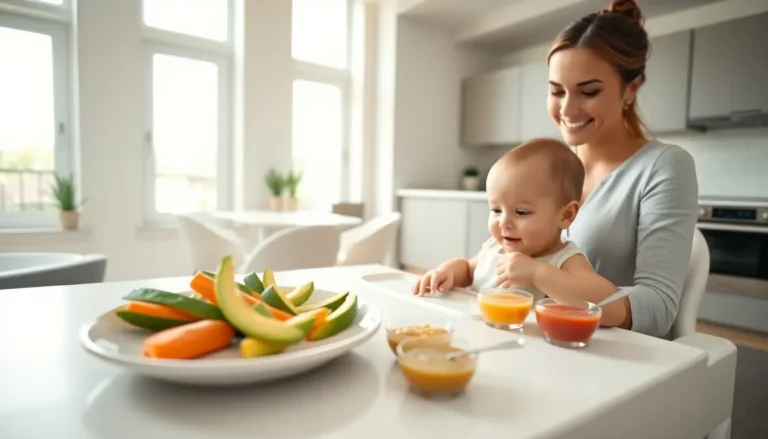
Baby-led weaning (BLW) is a method where babies feed themselves solid foods from the beginning. Parents skip the puree stage entirely. Instead, they offer soft, appropriately sized finger foods that babies can pick up and eat independently.
The term “weaning” here refers to introducing complementary foods, not stopping breastfeeding or formula. Babies continue milk feeds while learning to eat solids. The baby-led weaning guide principle is simple: let the baby control what goes into their mouth and how much they eat.
Gill Rapley, a UK health visitor and researcher, popularized this approach in the early 2000s. She observed that babies naturally want to self-feed around six months of age. Her baby-led weaning guide research showed that most developmentally ready babies can handle soft foods without needing purees first.
Traditional weaning involves spoon-feeding smooth purees, then gradually introducing textures. Baby-led weaning flips this script. Babies experience real food textures from day one. They learn to chew before they learn to swallow, which actually makes eating safer over time.
Parents often worry about mess. Yes, baby-led weaning gets messy. Food ends up on the floor, in hair, and across highchair trays. But this sensory exploration helps babies develop a positive relationship with food. The mess is part of the learning process.
Signs Your Baby Is Ready to Start
Most babies show readiness for solid foods around six months of age. But, age alone doesn’t determine readiness. Parents should look for specific developmental signs before starting their baby-led weaning guide journey.
Key readiness signs include:
- Sitting upright with minimal support. The baby can hold their head steady and sit in a highchair without slumping.
- Loss of tongue-thrust reflex. Babies no longer automatically push food out of their mouths with their tongues.
- Interest in food. The baby watches others eat, reaches for food, and opens their mouth when food approaches.
- Pincer grasp development. While not required initially, babies start developing the ability to pick up small objects between thumb and forefinger.
The American Academy of Pediatrics recommends introducing solids around six months. Before this age, babies’ digestive systems aren’t mature enough. Their motor skills also haven’t developed sufficiently for safe self-feeding.
Some babies show interest in food earlier, around four or five months. Interest alone doesn’t mean readiness. The physical development markers matter more than curiosity. Starting too early increases choking risk and may cause digestive issues.
Parents should consult their pediatrician before beginning. Some babies with developmental delays or medical conditions may need modified approaches. A healthcare provider can assess individual readiness and offer personalized guidance for the baby-led weaning guide process.
Best First Foods for Baby-Led Weaning
Choosing the right first foods makes baby-led weaning safer and more enjoyable. The best options are soft enough to mash between fingers yet firm enough to hold.
Excellent starter foods for any baby-led weaning guide:
- Ripe avocado strips
- Steamed broccoli florets (the stem makes a natural handle)
- Soft-cooked sweet potato wedges
- Banana spears (with some peel left on for grip)
- Steamed carrot sticks (cooked until very soft)
- Ripe mango slices
- Soft-cooked apple slices
- Strips of well-cooked chicken or fish
Food shape matters. For young babies, cut foods into stick or wedge shapes about the size of an adult finger. This shape allows babies to grip food in their fist while still having some sticking out to eat. As pincer grasp develops, parents can introduce smaller pieces.
Foods to avoid initially:
- Raw hard vegetables (carrots, celery, apples)
- Whole grapes or cherry tomatoes (cut lengthwise)
- Whole nuts or large nut pieces
- Popcorn
- Hot dogs or sausages (cut lengthwise if offering)
- Honey (until 12 months due to botulism risk)
- Added salt or sugar
Iron-rich foods deserve priority in any baby-led weaning guide. Babies’ iron stores from birth start depleting around six months. Good options include soft-cooked beef strips, dark chicken meat, lentils, and iron-fortified cereals mixed into other foods.
Variety matters from the start. Exposing babies to different flavors and textures early may reduce picky eating later. Don’t shy away from herbs, spices, or strong flavors, just skip the salt.
Essential Safety Tips to Prevent Choking
Safety concerns top the list for parents considering baby-led weaning. Understanding the difference between gagging and choking helps caregivers respond appropriately.
Gagging vs. choking: Gagging is normal and protective. It’s loud, involves coughing, and the baby’s face may turn red. Choking is silent, the baby cannot cough or cry, and their face may turn blue. Gagging happens frequently during baby-led weaning as babies learn to manage food. It’s actually their body’s safety mechanism.
Critical safety rules for every baby-led weaning guide:
- Always supervise meals. Never leave a baby alone while eating. Stay within arm’s reach at all times.
- Ensure proper positioning. Babies should sit upright at 90 degrees in a supportive highchair. Reclining increases choking risk.
- Test food softness. If you can’t mash the food between your thumb and finger, it’s too hard for your baby.
- Avoid high-risk foods. Round, hard, or sticky foods pose the greatest danger. Cut grapes and cherry tomatoes lengthwise. Avoid whole nuts.
- Learn infant CPR. Every caregiver should know how to respond to a choking emergency. Many hospitals and community centers offer courses.
Research published in Pediatrics found that baby-led weaning doesn’t increase choking risk compared to traditional weaning, when parents follow safety guidelines. The key is proper food preparation and constant supervision.
Some parents feel anxious watching their baby gag. This reaction is normal. But, staying calm helps the baby work through the gag reflex without panic. Over time, gagging decreases as babies develop better oral motor control.
Benefits of Baby-Led Weaning for Development
Baby-led weaning offers several developmental advantages. Research continues to explore these benefits, and many parents report positive outcomes.
Motor skill development: Self-feeding requires coordination. Babies practice their pincer grasp, hand-eye coordination, and fine motor skills at every meal. These skills transfer to other activities like holding crayons and stacking blocks.
Healthy eating patterns: Studies suggest baby-led weaning may promote better appetite regulation. Babies learn to recognize hunger and fullness cues because they control their intake. A 2017 study in JAMA Pediatrics found that baby-led weaning was associated with lower BMI in some children.
Family mealtime integration: Babies eating the same foods as family members can join meals more easily. This social aspect teaches eating behaviors through observation. Babies watch parents chew, use utensils, and enjoy food together.
Reduced picky eating: Early exposure to varied textures and flavors may decrease food selectivity later. Baby-led weaning guide principles encourage offering diverse foods from the start. Some research indicates these children accept new foods more readily as toddlers.
Independence and confidence: Self-feeding empowers babies. They make choices about what to eat and how much. This autonomy supports healthy psychological development around food.
Oral motor development: Chewing soft foods strengthens jaw muscles and supports speech development. Babies learn to move food around their mouths, which builds the same muscles used for talking.
Not every baby-led weaning guide benefit applies to every family. Some babies thrive with traditional weaning. Others do well with a combination approach. Parents should choose the method that works best for their child and lifestyle.