Table of Contents
ToggleTop baby-led weaning has become a popular approach for introducing solid foods to infants. This method lets babies feed themselves from the start, skipping purees entirely. Parents offer soft, finger-sized foods, and babies explore textures, tastes, and self-feeding at their own pace.
Baby-led weaning offers several benefits. It encourages independence, develops motor skills, and may reduce picky eating later in life. But, many parents feel uncertain about how to begin safely. This guide covers everything from ideal starting times to the best first foods and essential safety practices. Whether parents are curious about baby-led weaning or ready to immerse, these tips will help ensure a smooth and successful journey.
Key Takeaways
- Top baby-led weaning lets babies self-feed soft, finger-sized foods from the start, skipping purees and encouraging independence.
- Most babies are ready for baby-led weaning around six months when they can sit upright, have good head control, and show interest in food.
- The best first foods include steamed vegetables, ripe fruits, and soft proteins cut into finger-length strips that are easy to grasp.
- Gagging is normal and protective during baby-led weaning, while choking is silent and requires immediate intervention—learn infant CPR before starting.
- Breast milk or formula remains the primary nutrition source during the first year, so don’t worry if your baby explores more than eats initially.
- Minimize mealtime mess with splat mats, coverall bibs, and accepting that messy exploration is part of the learning process.
What Is Baby-Led Weaning?
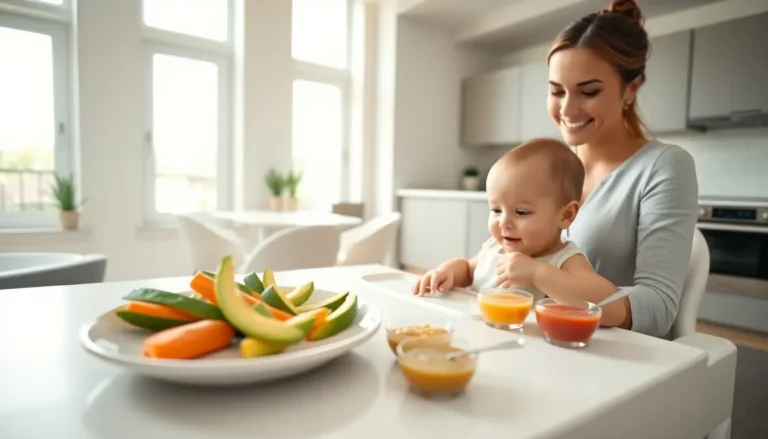
Baby-led weaning is a feeding approach where babies feed themselves solid foods from the beginning. Instead of spoon-feeding purees, parents offer soft, graspable foods that babies can pick up and eat independently.
The concept gained popularity through the work of Gill Rapley, a British health visitor and midwife who coined the term. Her research showed that babies have natural abilities to self-feed when given appropriate foods at the right developmental stage.
Traditional weaning typically involves spoon-feeding smooth purees, then gradually introducing textures. Baby-led weaning skips this progression. Babies start with soft whole foods and learn to chew before they learn to swallow.
This approach offers several advantages:
- Motor skill development: Picking up food builds hand-eye coordination and fine motor skills.
- Family meals: Babies can eat modified versions of what the family eats.
- Self-regulation: Babies control how much they eat, which may support healthy eating habits.
- Texture acceptance: Early exposure to various textures may reduce food aversions.
Baby-led weaning doesn’t mean parents step back entirely. They still choose what foods to offer, prepare them safely, and supervise all meals. The baby simply decides how much to eat and at what pace.
When to Start Baby-Led Weaning
Most babies are ready for baby-led weaning around six months of age. But, age alone isn’t the only factor. Babies must show specific developmental signs before starting solids.
Key readiness signs include:
- Sitting upright with minimal support: Babies need trunk stability to eat safely.
- Good head control: They should hold their head steady without wobbling.
- Loss of tongue-thrust reflex: This reflex pushes food out of the mouth. It typically fades around 4-6 months.
- Interest in food: Babies may watch others eat, reach for food, or open their mouths when food approaches.
- Ability to grasp objects: They should be able to pick things up and bring them to their mouth.
The American Academy of Pediatrics recommends exclusive breastfeeding or formula feeding for the first six months. Starting baby-led weaning before this age isn’t recommended because babies’ digestive systems and motor skills aren’t ready.
Some babies show readiness signs at exactly six months. Others need a few more weeks. There’s no rush. Breast milk or formula remains the primary nutrition source throughout the first year. Solid foods complement, not replace, milk feeds during this period.
Parents should consult their pediatrician before starting baby-led weaning, especially if their baby was premature or has developmental delays.
Best First Foods for Baby-Led Weaning
Choosing the right first foods makes baby-led weaning safer and more enjoyable. The best starter foods are soft enough to mash with gums but firm enough to hold.
Ideal Starter Foods
Vegetables:
- Steamed broccoli florets (the stem acts as a handle)
- Roasted sweet potato spears
- Steamed carrot sticks (cooked until very soft)
- Avocado slices
- Steamed zucchini strips
Fruits:
- Ripe banana (leave some peel for grip)
- Soft pear slices
- Ripe mango spears
- Steamed apple slices
Proteins:
- Shredded chicken
- Flaked salmon (bones removed)
- Soft meatballs
- Strips of omelet
- Well-cooked beans
Food Preparation Tips
Cut foods into finger-length strips, about the size of an adult finger. This shape allows babies to grip the food with part sticking out of their fist to eat.
Cook vegetables until they’re soft enough to squish between two fingers. Raw vegetables and hard fruits pose choking hazards and should be avoided until babies develop stronger chewing skills.
Avoid adding salt or sugar to baby’s food. Their kidneys can’t process excess sodium, and early sugar exposure may lead to preference for sweet foods.
Introduce common allergens early and one at a time. Peanut butter (thinned or spread on toast), eggs, and fish are important to introduce during the first year. Research shows early introduction may actually reduce allergy risk.
Essential Safety Tips
Safety is the top priority in baby-led weaning. Understanding the difference between gagging and choking is critical for every parent.
Gagging vs. Choking
Gagging is normal and protective. Babies have a sensitive gag reflex positioned further forward on their tongue than adults. When food triggers it, babies cough, splutter, and push food forward. This is the body’s way of preventing choking.
Choking is silent. A choking baby cannot cough, cry, or make noise. Their face may turn red or blue. This requires immediate intervention.
Foods to Avoid
Certain foods pose serious choking hazards:
- Whole grapes, cherry tomatoes, and berries (cut lengthwise)
- Whole nuts and seeds
- Popcorn
- Raw apple chunks
- Hot dogs and sausages (cut lengthwise, never in rounds)
- Hard raw vegetables
- Sticky foods like large globs of nut butter
Safe Feeding Practices
- Always supervise meals. Never leave a baby alone while eating.
- Ensure babies sit upright in a highchair with proper support.
- Avoid distractions during meals. Turn off screens.
- Learn infant CPR and choking first aid before starting baby-led weaning.
- Never put food in a baby’s mouth. Let them control the process.
- Offer water in an open cup or sippy cup with meals.
Baby-led weaning is safe when parents follow these guidelines. Studies show it doesn’t increase choking risk compared to traditional weaning when done correctly.
Common Challenges and How to Overcome Them
Baby-led weaning isn’t always smooth. Parents often face challenges in the early weeks. Here’s how to handle the most common ones.
The Mess Factor
Baby-led weaning is messy, there’s no way around it. Food ends up on the floor, the highchair, the baby, and sometimes the walls. Parents can minimize cleanup by:
- Using a splat mat under the highchair
- Stripping baby down to a diaper during meals
- Using bibs with sleeves or coverall bibs
- Accepting that mess is part of the learning process
Baby Doesn’t Seem to Eat Much
In the early weeks, babies explore more than they eat. They squish, smear, and taste. Actual consumption is often minimal. This is completely normal.
Breast milk or formula provides complete nutrition during the first year. Solid food exposure at this stage teaches eating skills. The phrase “food before one is just for fun” captures this concept.
Intake typically increases around 8-9 months as babies develop better coordination.
Family Concerns
Grandparents and relatives may worry about choking or believe babies need purees. Parents can address concerns by:
- Explaining the research supporting baby-led weaning
- Demonstrating proper food preparation and supervision
- Sharing information from pediatric feeding specialists
- Acknowledging concerns while setting clear boundaries
Food Throwing
Babies throw food. It’s developmental and a way to learn cause and effect. Parents can reduce throwing by:
- Offering small amounts at a time
- Ending the meal when throwing becomes persistent
- Avoiding big reactions, which may reinforce the behavior